What is Abrasion-Resistant Steel? A Practical Guide for Construction and Mining
AR grades compared, Brinell hardness explained, and application guidance to help you spec the right plate the first time.
Abrasion-resistant steel is one of the most misunderstood materials in heavy equipment. Contractors overbuy it, underbuy it, or pick a grade based on what's available rather than what fits the application. This guide covers the basics of AR steel, how the grades differ, and how to match the right material to your equipment and job conditions.
What Is Abrasion-Resistant Steel?
Abrasion-resistant (AR) steel is a quenched and tempered, high-carbon steel designed to resist surface wear from rock, gravel, sand, and ore. It is significantly harder than standard structural steel, and that hardness is the primary reason it lasts longer in ground-engaging applications.
Standard A36 plate runs 120 to 160 HBW (Brinell Hardness). AR grades start at 200 HBW and go past 600 HBW at the top end. The higher the number, the harder the steel and the longer it holds up against abrasive material.
The hardness comes from the manufacturing process. Steel is heated to an austenizing temperature, then rapidly quenched. This locks carbon into a martensitic crystal structure. A tempering step follows to reduce brittleness while keeping most of the hardness gain.
Where you see AR steel on job sites:
- Loader bucket lips and side plates
- Motor grader cutting edges
- Dump truck and haul truck body liners
- Snow plow blades and cutting edges
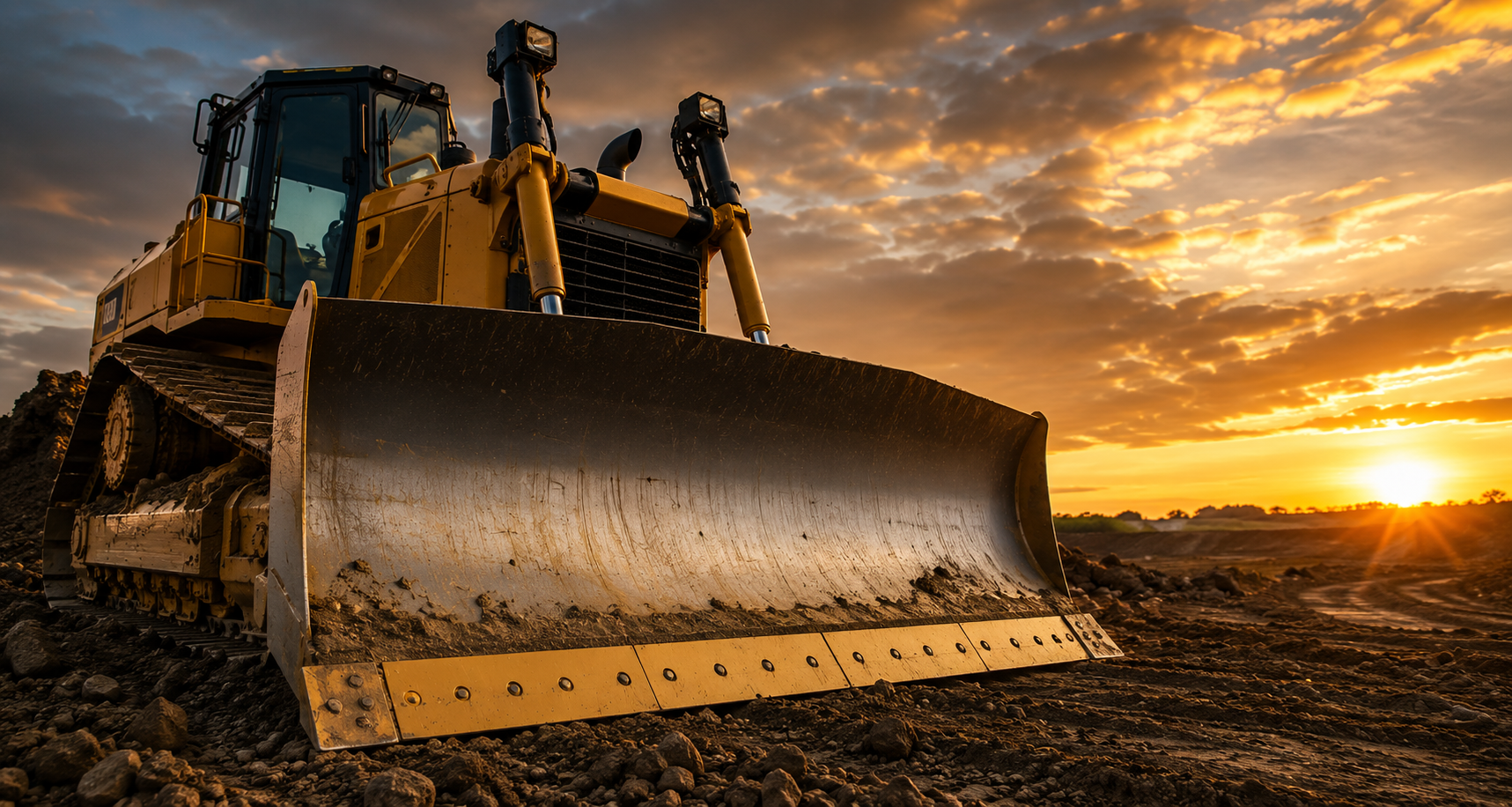
- Dozer blade face plates
- Hopper, chute, and conveyor liners
- Scraper bowl floors
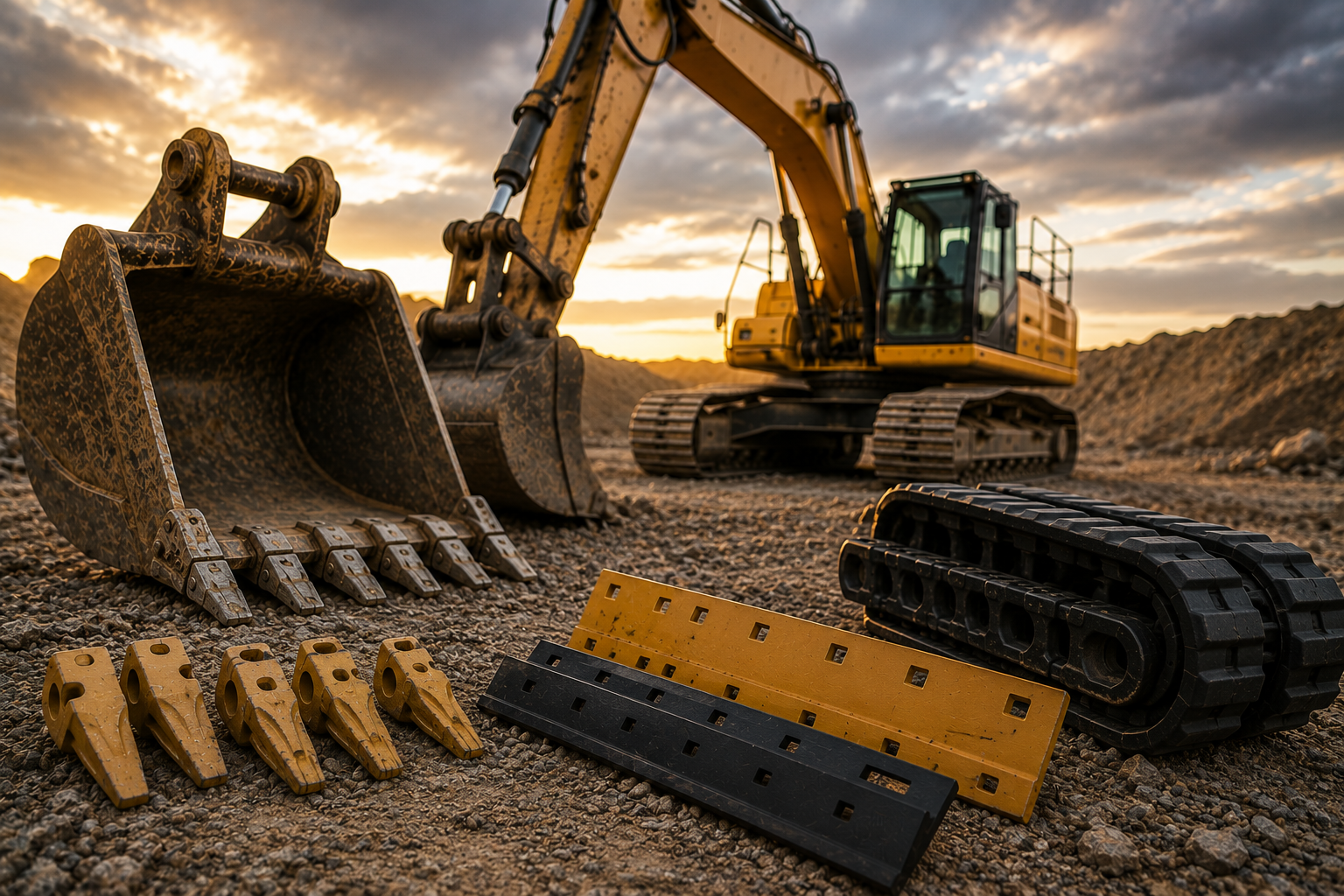
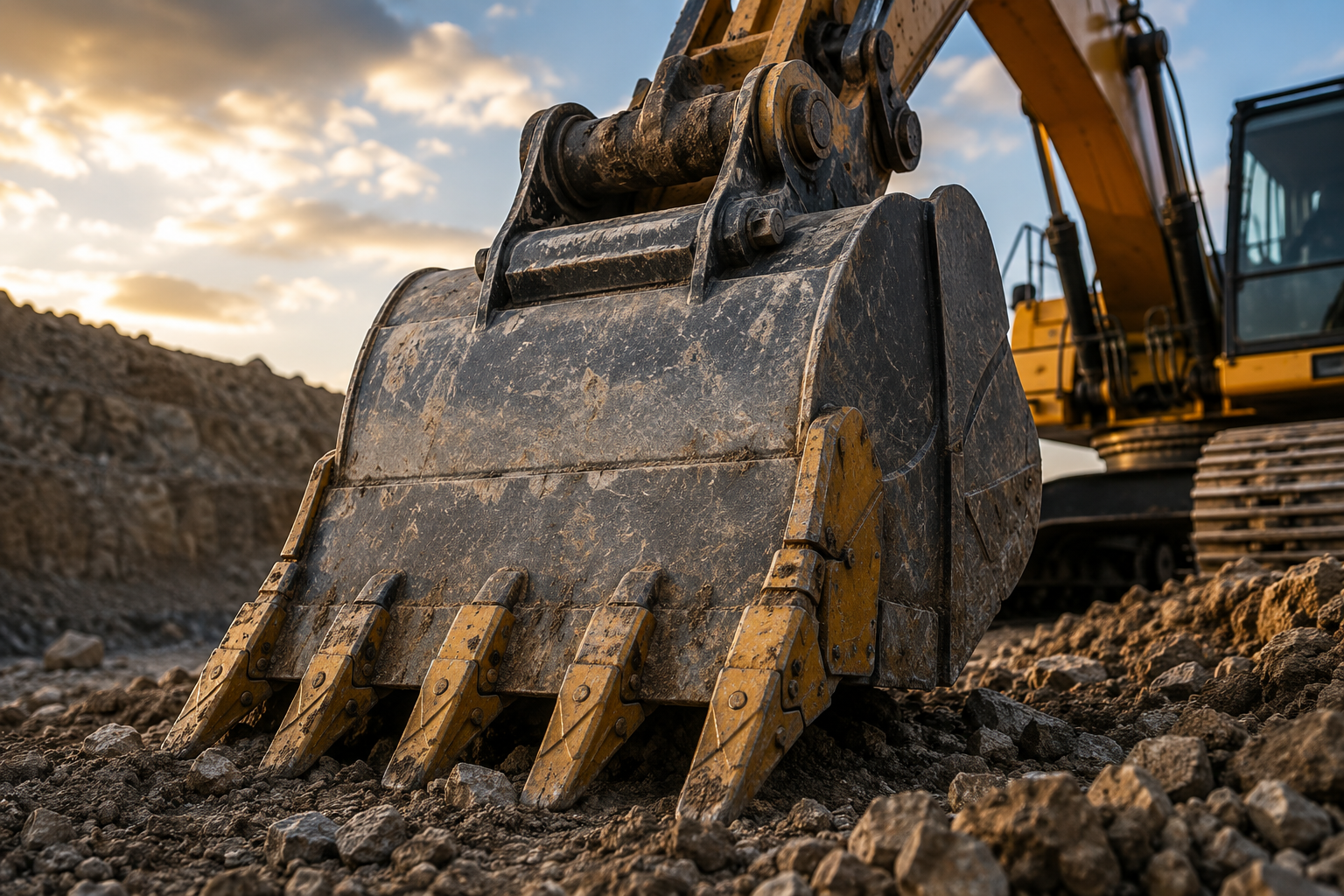
- Excavator bucket wear plates
AR steel is sold as plate and sheet. Plate is typically 3/16 inch and thicker and is used for most ground-engaging wear parts. Sheet is thinner gauge material used in lighter-duty liner applications. Along with manganese steel and chromium carbide overlay, abrasion-resistant steel is one of the primary wear-resistant metals used in heavy equipment.
Abrasion resistance and impact resistance are not the same thing. A very hard steel can crack or spall under repeated high-impact loading. Knowing which failure mode is shortening your wear parts is the most important factor in picking the right grade.
 Brinell Hardness Explained
The Brinell Hardness test (ASTM E10) presses a tungsten carbide ball into the steel surface under a controlled load and measures the diameter of the indentation. A smaller indentation means a harder material. Results are reported in HBW (Hardness Brinell Wide).
The table below shows how common materials stack up and what that means for wear life in typical abrasive conditions.
| Material | Typical HBW Range | Relative Wear Life* |
|---|---|---|
| Mild Steel (A36) | 120–160 HBW | 1x (baseline) |
| High-Strength Low-Alloy (A572 Gr50) | 160–200 HBW | 1.3–1.5x |
| AR200 | 180–220 HBW | ~1.5x |
| AR400 | 360–440 HBW | 4–5x |
| AR450 | 425–475 HBW | 5–7x |
| AR500 | 470–530 HBW | 7–9x |
| AR600 / Hardox® 600 | 570–640 HBW | 12–15x |
*Wear life multipliers are approximate. Fine, high-silica abrasives like wet sand and taconite amplify the difference between grades more than coarse rock or aggregate does.
Always request a mill test report (MTR) that lists actual hardness by heat lot. Generic AR400 can vary 60 or more HBW points between offshore suppliers. Certified Hardox® plate carries a guaranteed HBW range per plate, not just a nominal grade name.
AR Grades: AR200 Through AR600
AR grade names are not perfectly standardized across producers, but the number consistently tracks with the target Brinell hardness. Here is what each tier means in practice.
AR200 / AR235
The entry level. Only marginally harder than HSLA structural plate. Bends cleanly and welds without special procedures. Good for light-duty liners and dump body floors where formability matters more than peak wear life. Not worth specifying for ground-engaging applications with any real abrasive content.
AR400
The most commonly used AR grade for construction and municipal equipment. AR400 gives a strong balance of wear life, impact toughness, and weldability. It holds up in cold climates down to around -40 F without becoming brittle, which matters for northern fleet operations.
Common AR400 applications:
- Loader bucket side plates and floor plates
- Grader blade support structures
- Dump trailer and body floors
- Snow plow blade bodies
- Hopper and chute liners in aggregate operations
AR450
A step up from AR400 in pure sliding abrasion resistance, without the welding demands of AR500. The difference shows most clearly with fine, high-silica abrasives like sand, coal fines, and grain. AR450 is common in aggregate processing, concrete mixer drums, and conveyor impact beds.
AR500
Used where AR400 is not lasting long enough and the application involves hard, fine abrasives. AR500 requires preheat and low-hydrogen consumables when welding. Cold forming is limited. Common in severe-duty mining chutes, rock-box liners on excavators, and jaw crusher wear plates.
AR600 / Hardox® 600
The hardest commercially available AR grade. Used in hard-rock mining, taconite processing, basalt quarrying, and other high-wear environments where AR500 is still wearing out too quickly. Welding requires specialist procedures. Cold forming is not practical. The cost per pound is significantly higher, but in the right application the service life difference justifies it.
Specifying the hardest available grade is not always the right call. AR600 in a high-impact, low-abrasion environment can crack and spall faster than AR400 because the toughness-to-hardness ratio is wrong for that type of loading. Match the grade to the failure mode, not just the hardness number.
Which Grade for Which Application?
The cards below are a starting point. Your actual conditions including abrasive type, moisture level, impact energy, and operating temperature may push the recommendation up or down one grade.
- AR400 to AR450
- High impact at the lip; sliding abrasion along sides
- Toughness matters as much as hardness here
- See loader edges
- AR400 for standard cutting edges
- AR500 inserts for hard-rock grading or caliche
- See grader blades
- AR400 body plate
- AR500 or carbide-insert cutting edge for road grit and salt abrasion
- See snow plow blades
- AR450 to AR500 for hard ore
- AR400 sufficient for coal and softer material
- Haul road conditions affect body wear significantly
- AR400 for aggregate and crushed stone
- AR450 to AR600 for high-silica fines: sand, taconite, quartz
- Impact angle matters for liner selection
- AR400 structural backing
- Hardox® 400 or 450 face plates for hard-rock dozing
- See bulldozer wear parts
- AR400 throughout for most applications
- AR450 cutting edge for demolition and concrete rubble
- See skid steer wear parts
- AR400 blade bodies
- AR500 cutting edge inserts reduce replacement frequency in grit-heavy seasons
- Lower total cost over a maintenance cycle
Hardox® vs. Generic AR Plate
Hardox® is SSAB's certified wear plate line and the most widely specified brand in the industry. Equipment Blades is an authorized Hardox® Wear Parts Center, which means we fabricate and process Hardox® plate in-house with SSAB-backed engineering support.
Here is how certified Hardox® compares to generic AR plate at the same nominal grade:
| Factor | Generic AR Plate | Hardox® Certified |
|---|---|---|
| Hardness tolerance | +/- 40–60 HBW typical | +/- 30 HBW guaranteed per plate |
| Charpy impact toughness | Not always specified | Specified and tested per heat |
| Thickness tolerance | Standard EN/ASTM tolerances | Tighter than EN 10029 |
| Mill certification | Available but varies in detail | Full MTR with chemistry, hardness, and tensile data |
| Cold forming guidance | Generic bend radii | Grade-specific minimum bend radii published by SSAB |
| Flatness | Variable | Guaranteed, which reduces fit-up issues during fabrication |
| Price | Lower upfront | 5–15% higher; often offset by longer service life |
For municipal fleets and government operations with scheduled maintenance contracts, Hardox® certification gives procurement teams a documented specification they can reference in bid documents. For construction and mining, it means more predictable replacement intervals and fewer unplanned liner changes.
Generic AR plate can be a reasonable choice for low-abrasion applications where the hardness tolerance range does not matter much. When you are specifying liner plate for a high-throughput operation or writing a long-term service contract, the certified data from Hardox® is worth the price difference.

When AR Steel Is the Wrong Choice
Over-specifying AR steel costs money and creates fabrication problems. Harder grades are more difficult to weld, more susceptible to hydrogen cracking if proper procedures are skipped, and more brittle under repeated impact loads. There are applications where mild or HSLA structural steel is the correct call.
Light-Duty Loaders Working Topsoil, Mulch, or Compost
The abrasive index of these materials is very low. AR400 will likely outlast the machine. A572 Gr50 at a lower cost per pound is adequate and easier to repair in the field.
Secondary Structural Members
Bucket back walls, side frames, and internal gussets that do not contact abrasive material do not need AR hardness. Specifying AR plate for these parts adds cost without adding wear life.
High-Impact Primary Crushing Applications
Jaw crusher cheek plates and cone liners typically use 12 to 14 percent manganese steel (Hadfield grade), which work-hardens under impact. Standard AR plate does not work-harden the same way and can crack in these applications. If impact is the dominant force rather than abrasion, manganese steel is the right material.
Parts Requiring Heavy Machining
Machining hardened AR plate wears cutting tools aggressively. If a component requires significant drilling, turning, or milling, fabricating from HSLA and applying a hard surface treatment is often more practical and less expensive.
Structural Chassis and Frame Members
Frame rails, cross-members, and structural supports carry bending and torsional loads, not abrasive wear loads. High-strength structural steel such as A514 or T-1 is the correct specification for these parts.
Welding and Fabrication
AR steel can be welded with standard equipment, but the higher carbon equivalent of these grades makes them susceptible to hydrogen-induced cold cracking (HICC). HICC often does not show up until hours or days after welding is complete, which makes it easy to miss during inspection.
Preheat
Preheat requirements increase with hardness and plate thickness. General guidelines:
- AR400 under 3/4 inch: preheat to 100–200 F
- AR400 over 3/4 inch, or AR450 to AR500: preheat to 200–300 F minimum
- AR500 to AR600: preheat to 300–400 F; consult SSAB or your filler metal manufacturer for a written procedure
Filler Metal
Use low-hydrogen electrodes (E7018 or E8018) or solid GMAW wire. Flux-cored wire must be properly dried before use. Match filler strength to the base metal. Over-matching filler increases cracking risk at the heat-affected zone.
Post-Weld Cooling
Slow controlled cooling significantly reduces HICC risk. Wrapping completed weldments in insulating blanket for 30 to 60 minutes is standard practice. On heavier section thickness, post-weld heat treatment at 300 F for one hour per inch of thickness is recommended.
Cold Forming
- AR400: can be cold formed with adequate bend radius; follow SSAB's published minimum bend radii for certified plate
- AR450: cold forming is possible but requires larger bend radius than AR400
- AR500: very limited cold forming capability; consult the manufacturer before attempting
- AR600: do not cold form
Equipment Blades can supply custom-cut Hardox® blanks pre-cut to your templates. This reduces saw and plasma time on hardened plate and eliminates waste from full-sheet ordering. Contact us through the custom manufacturing page for details.
What to Ask Your Supplier
Before placing an order for AR plate or fabricated wear parts, get answers to these questions:
- Can you provide a mill test report (MTR) for each heat lot? This should include chemistry, actual hardness values, and tensile data. If a supplier cannot produce this, look elsewhere.
- What is the actual measured hardness on this plate? Ask for the HBW from the MTR, not just the nominal grade designation. "AR400" is a category, not a guarantee.
- Where is the steel produced? Country of origin affects tariff exposure and total landed cost. Equipment Blades fabricates Hardox® wear parts in the USA with no Section 232 tariff surcharges.
- What are the lead times for your size and quantity? Stock plate ships quickly. Custom-cut or fabricated parts require production scheduling. Confirm the timeline before committing to a project schedule.
- Can parts be supplied pre-drilled? Drilling AR plate in the field is slow and hard on bits. Ordering with pre-drilled mounting holes cuts installation time significantly.
- What welding procedures do you recommend for field repairs? A supplier who cannot answer this question does not work with the material closely enough. This matters when your crew needs to make a repair on a job site.
Frequently Asked Questions
Abrasion-resistant (AR) steel is a quenched and tempered, high-carbon steel designed to resist surface wear from rock, gravel, sand, and ore. It is significantly harder than standard structural steel, with grades ranging from 200 HBW to over 600 HBW. The higher the Brinell hardness number, the longer the steel holds up against abrasive material. AR steel is used for cutting edges, bucket liners, truck body liners, chute liners, and other ground-engaging wear parts.
AR400 is an abrasion-resistant steel plate with a nominal Brinell hardness of 400 HBW (actual range: 360 to 440 HBW). It is the most widely used AR grade in construction and municipal equipment. Common applications include loader bucket side plates, motor grader blade supports, dump trailer floors, snow plow bodies, and hopper liners. AR400 provides 4 to 5 times the wear life of mild A36 steel and remains impact-tough down to around -40 F, which matters for northern fleet operations.
AR500 is an abrasion-resistant steel plate with a nominal Brinell hardness of 500 HBW (actual range: 470 to 530 HBW). It provides 7 to 9 times the wear life of mild steel and is used in severe-duty applications where AR400 is not lasting long enough. Common uses include mining chutes, rock-box liners on excavators, and jaw crusher wear plates. AR500 requires preheat when welding and has limited cold-forming capability compared to AR400.
AR400 has a hardness of 360 to 440 HBW and provides 4 to 5 times the wear life of mild steel. AR500 has a hardness of 470 to 530 HBW and provides 7 to 9 times the wear life. AR400 is easier to weld, more resistant to impact cracking, and can be cold formed with the proper bend radius. AR500 lasts longer in high-silica, fine-abrasive environments but requires preheat when welding and should not be cold formed without checking the manufacturer's guidelines first. For most construction and municipal equipment, AR400 is the right starting point. Step up to AR500 when AR400 is not lasting long enough in your specific conditions.
Hardox is SSAB's certified brand of abrasion-resistant wear plate. It is produced to tighter hardness tolerances than generic AR plate, with a guaranteed range of plus or minus 30 HBW per plate. Hardox is tested for Charpy impact toughness and delivered with full mill certifications per heat lot. Available grades include Hardox 400, 450, 500, and 600. Equipment Blades Inc. is an authorized Hardox Wear Parts Center, which means Hardox plate is fabricated in-house with SSAB engineering support.
Yes. The grade number corresponds to the target Brinell hardness. AR400 targets 400 HBW, AR500 targets 500 HBW, and so on. Certified grades like Hardox® specify a guaranteed hardness window per plate, for example 370 to 430 HBW for Hardox® 400. Generic plate at the same nominal grade can vary significantly. Always verify against the MTR.
GMAW works fine on AR400 and AR450 when you follow the right procedure. Use low-hydrogen solid wire such as ER70S-6 or ER80S-D2, preheat the plate to at least 150 to 200 F, and let the weld cool slowly. Skipping preheat is the most common cause of delayed cracking in field-welded AR parts. On AR500 and above, consider flux-cored GMAW and get a written welding procedure from SSAB or your wire manufacturer before starting.
Stainless steel is selected for corrosion resistance, not wear resistance. A 304 or 316 stainless plate runs 150 to 200 HBW, which is softer than many structural steels. For applications that see both abrasion and corrosive media like salt slurry or acid mine drainage, duplex stainless or a rubber-lined AR substrate may be the right combination. For dry abrasion applications, AR steel outperforms stainless on wear life at a much lower cost per pound.
Hardox® is produced to tighter hardness tolerances, tested for Charpy impact toughness, and delivered with full mill certifications per heat lot. SSAB also publishes grade-specific welding and forming guidelines that generic suppliers do not provide. For procurement teams writing long-term service specifications, the certified documentation is useful. For contractors replacing parts frequently in high-wear conditions, the tighter hardness range translates to more consistent service life.
The hardness number is the same, but ballistic-rated AR500 is additionally tested to a ballistic limit standard such as MIL-A-46100. Wear-grade AR500 is not tested or certified for ballistic performance. If a supplier markets AR500 for both uses, ask specifically which certification applies to the heat lot you are purchasing.
The density is essentially identical at approximately 0.284 lb per cubic inch. Weight is determined by dimensions, not hardness. Where AR steel can reduce weight is by allowing thinner plate to achieve the same service life as thicker mild steel. A 3/8 inch AR400 liner may outlast a 3/4 inch A36 liner in the same application, giving you a meaningful weight reduction for the same replacement interval.
Yes. Surface preparation is more important than the hardness grade for coating adhesion. Blast cleaning to SSPC SP6 at minimum, SP10 for better adhesion. Standard epoxy primer and polyurethane topcoat systems adhere well to properly prepared AR plate. Keep in mind that coatings on wear surfaces will abrade off quickly. Coatings are most useful on non-contact surfaces where corrosion protection is the goal.
Equipment Blades handles orders from single replacement cutting edges to full fleet production runs. Contact the team through the custom manufacturing page with your part geometry, material grade, quantity, and timeline. Current standard turnaround on Hardox® cutting edges is one week or less.
Section 232 steel tariffs apply to imported plate. Equipment Blades fabricates Hardox® wear parts in the USA, so customers are not paying tariff surcharges on top of the base material cost. If you are sourcing plate from an offshore distributor, confirm tariff exposure before finalizing your budget.