
Article: How Long Should Bucket Cutting Edges Last? The 5 Variables That Control Wear Life

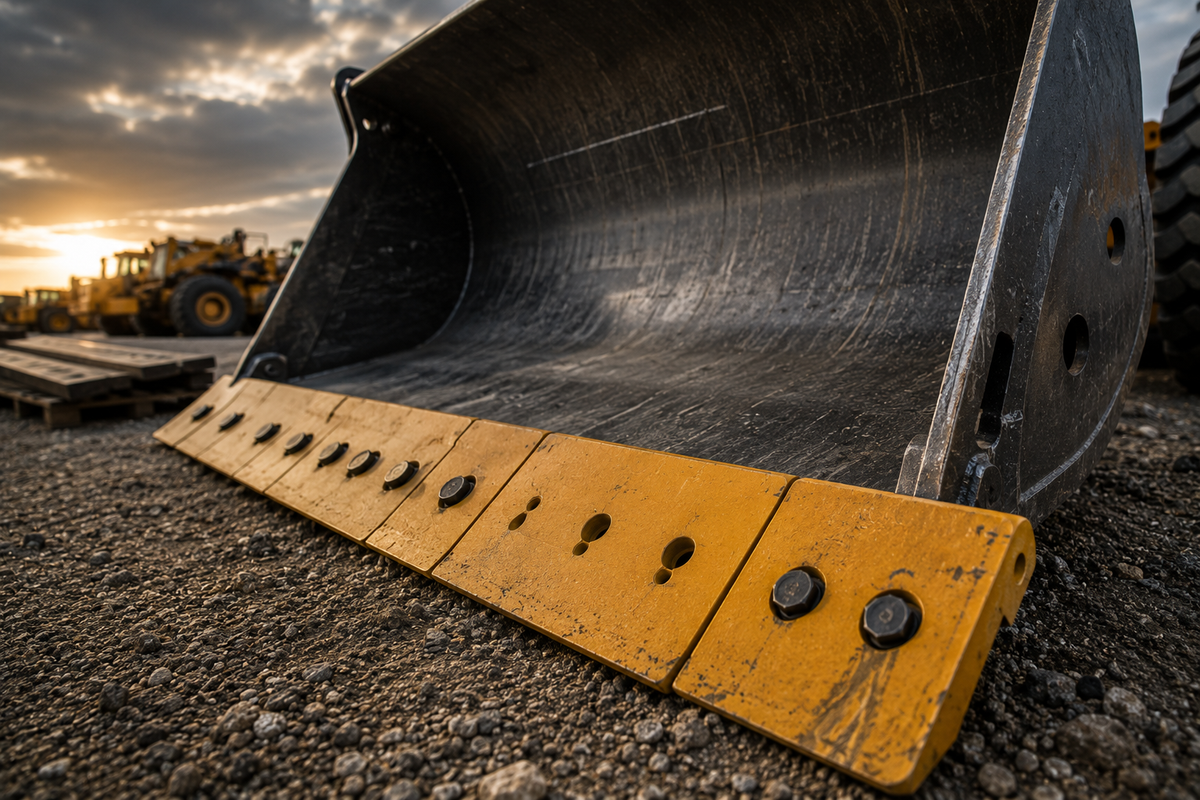
How Long Should Bucket Cutting Edges Last? The 5 Variables That Control Wear Life
Why two identical machines can have completely different replacement intervals, and what your actual wear data is telling you about your operation.
Bucket cutting edge life ranges from under 200 hours to over 2,000 hours depending on the machine, the material, and how the equipment is operated. If you are managing a fleet and cannot predict when edges need to change, you are either replacing them too early and wasting money, or too late and letting worn edges damage the bucket shell. This guide covers the five variables that actually control wear rate, what a normal replacement interval looks like by application, and what your current wear pattern is telling you.
What a Normal Wear Interval Looks Like
There is no universal answer for how long a bucket cutting edge lasts because the range of conditions in the field is too wide. What there are are reasonable benchmarks by application that let you assess whether your current replacement interval is in line with what is normal, better than normal, or a sign that something is wrong.
| Machine and Application | Primary Material | Typical Interval (AR400) | Notes |
|---|---|---|---|
| Wheel loader, aggregate yard | Crushed stone / gravel | 800–1,400 hours | Sliding abrasion; longer on coarser material |
| Wheel loader, sand and gravel | Fine silica sand | 400–700 hours | High-silica fines wear significantly faster |
| Wheel loader, topsoil / compost | Soft, low-abrasion material | 1,500–2,500+ hours | Often outlasts the planned PM cycle |
| Excavator, general earthwork | Mixed soil and rock | 600–1,200 hours | Impact at penetration; abrasion on the drag |
| Excavator, hard rock / quarry | Granite, basalt, limestone | 200–450 hours | Step up to AR500 if below 300 hours consistently |
| Skid-steer, construction site | Concrete rubble, mixed fill | 400–900 hours | Impact loading shortens intervals on demolition work |
| Skid-steer, topsoil / landscaping | Soft material | 1,000–2,000+ hours | Light abrasion; replacement often deferred too long |
| Mining loader, hard ore | Iron ore, taconite | 150–350 hours | High value on every hour gained; step up to AR500 |
Intervals are estimates based on industry field data and customer reporting for standard 1-inch AR400 edges. Actual results vary with machine weight, duty cycle, operator technique, and edge thickness. Reversible edges can extend these intervals by roughly 80 percent when flipped at mid-life before the bevel is gone.
If your replacement interval is significantly shorter than the table above, the problem is rarely just "the edge wore out." One of the five variables below is accelerating wear beyond what the material alone would cause. Finding which one is the more useful exercise than simply ordering the next set of edges.
The 5 Variables That Control Wear Life
Wear life is not a fixed property of an edge. It is the result of five variables interacting on every shift. Two machines running the same edge in the same yard can have completely different replacement intervals if any of these five factors differ.
Variable 1: Abrasive Material Type
Material type is the dominant factor in edge wear rate. The key property is not how hard the material looks — it is the silica content and particle size of what the edge is actually moving. Fine-grained, high-silica materials like sand, coal fines, and taconite are far more abrasive than their apparent hardness suggests because the fine particles behave like sandpaper against the steel surface on every pass.
The comparison below shows how dramatically material type affects wear rate at the same steel grade:
| Material | Relative Wear Rate | Wear Mechanism | Grade Recommendation |
|---|---|---|---|
| Topsoil, compost, mulch | Very low | Minimal abrasion; occasional impact | AR400 or lighter |
| Clay and silty soil | Low | Low-abrasion sliding | AR400 |
| Road base and gravel | Moderate | Sliding abrasion; coarse particles | AR400 |
| Crushed stone / aggregate | Moderate-high | Sliding abrasion with impact at penetration | AR400 to AR450 |
| Fine silica sand | High | Fine-particle abrasion; high silica content | AR450 to AR500 |
| Granite, basalt | High | Impact at penetration; sliding abrasion | AR500 |
| Iron ore, taconite | Very high | Fine silica + high density; extreme sliding abrasion | AR500 to Hardox 500 |
Moisture level also matters. Wet sand and wet aggregate are significantly more abrasive than dry material of the same type because moisture reduces the cushioning effect of the material pile and forces the edge into direct particle contact on every pass.
If you are replacing edges more frequently in wet conditions or during certain seasons, material moisture is likely a factor. Tracking replacement intervals by season alongside material type gives you the data to adjust grade or schedule maintenance accordingly.
Variable 2: Edge Steel Grade
The steel grade is the most straightforward variable to control. Switching from mild A36 plate to certified AR400 typically quadruples wear life in abrasive conditions. The math on that change almost always justifies the higher per-edge cost within the first or second replacement cycle.
Where contractors leave money on the table is by stopping at AR400 in applications where AR450 or AR500 would significantly extend the interval. The table below shows how grade affects wear life multiplier across abrasive types:
| Steel Grade | Typical HBW | Wear Life vs. Mild Steel | Best For |
|---|---|---|---|
| A36 / mild steel | 120–160 HBW | 1x (baseline) | Non-abrasive applications only |
| AR400 / Hardox 400 | 360–440 HBW | 4–5x | Most construction and municipal equipment |
| AR450 / Hardox 450 | 425–475 HBW | 5–7x | Fine aggregate, sand, high-silica fines |
| AR500 / Hardox 500 | 470–530 HBW | 7–9x | Hard-rock quarry, mining, severe-duty applications |
One note on certified vs. generic plate: a generic "AR400" edge from an offshore supplier can vary 60 or more HBW points from one heat to the next. That variance directly translates to inconsistent replacement intervals. Certified Hardox plate is guaranteed to a specific HBW window per plate, which is why fleet managers running replacement interval programs specify it over generic plate. See our certified Hardox cutting edges for current stock and lead times.

Stepping up to AR500 in a high-impact application where the edge is taking direct rock strikes will shorten life, not extend it. Harder grades are more brittle under repeated impact. If your edges are chipping or cracking rather than wearing smooth, the failure mode is impact, not abrasion. AR500 is the wrong fix for a cracking edge. Match the grade to the actual failure mode.
Variable 3: Operator Technique
Operator technique is the variable most fleet managers underestimate. The same machine, same material, same edge grade can have dramatically different replacement intervals depending on how the operator uses the bucket. This is not about operator skill in the general sense — it is about specific habits that directly accelerate or reduce edge wear.
Down Pressure and Attack Angle
Excessive down pressure forces the edge flat against the material surface and increases the contact area on every pass. Less contact area, controlled by a shallower attack angle, means less friction and slower wear on the cutting face. Operators who work the bucket at a steep angle into the pile wear edges significantly faster than those who penetrate at a shallower angle and roll material up rather than scraping it.
Using the Bucket to Walk the Machine
Using the bucket to reposition or "walk" a machine places extreme lateral and torsional loads on the cutting edge and the mounting hardware. This is one of the fastest ways to crack an edge, strip bolt holes, or damage the bucket shell lip. It also loosens hardware that was correctly torqued at installation.
Dragging the Bucket Loaded
Dragging a loaded bucket along the ground to move material applies the full load of the material against the cutting edge surface. Brief contact is normal. Extended dragging grinds the edge down at a rate far faster than normal digging cycles and introduces heat into the steel at the wear face.
Crowding the Bucket at the End of the Dig Cycle
Over-rotating the bucket at the end of a dig cycle to get the last bit of material drives the heel of the bucket and the edge ends into the ground. End bits and corner edges wear fastest in operations where this happens consistently.
If two machines running identical setups have a significant wear interval gap, watch both operators for one shift before ordering different grade edges. The answer is often technique, not material. Addressing technique is free. Upgrading grade costs money and may not fix the underlying issue.
Variable 4: Installation and Hardware
A correctly specified edge installed with incorrect torque or onto a dirty seat will fail early regardless of steel grade. Installation quality affects wear life from the first hours of operation.
Bolt Torque
Under-torqued bolts allow the edge to flex and micro-shift under load. That movement concentrates stress at the bolt holes, causing the steel around each hole to wear in an accelerated scalloping pattern. You can identify this failure mode by looking for wave-shaped dips in the edge profile centered on each bolt hole. If you see scalloping, check hardware torque on the current set and replace the bolts when installing the next set.
Correct torque for standard cutting edge hardware:
- 5/8 inch Grade 8 bolts: 150 to 180 ft-lbs
- 3/4 inch Grade 8 bolts: 260 to 300 ft-lbs
- 7/8 inch Grade 8 bolts: 420 to 460 ft-lbs
- 1 inch Grade 8 bolts: 600 to 650 ft-lbs
Re-torque after the first 8 to 10 hours of operation. Bolts will seat and lose some pre-load during initial use.
Seat Preparation
Rust scale, compacted fines, and worn or cracked weld beads on the bucket lip create high spots under the edge. An edge installed on a dirty or uneven seat rocks under load even with correct bolt torque. Clean the seat with a wire brush before every installation. On heavily worn seats, check for weld bead damage and repair before installing a new edge.
Hardware Grade
Never use Grade 5 hardware on cutting edges. The higher shear strength of Grade 8 bolts is required. Grade 5 bolts will shear under load, sometimes within hours of installation on heavier machines or in aggressive material. Always replace bolts when changing an edge — reusing hardware that has been in service puts a pre-stressed bolt under full load from the first shift.
Reversible Edges
Most bolt-on cutting edges are reversible. Flipping the edge at mid-life exposes a fresh wear face and extends the total interval by roughly 70 to 90 percent of the original side's life. The key is flipping before the bevel on the active face is fully consumed. Once the bevel is gone, the second face will not wear evenly and you lose most of the benefit of reversal.
Variable 5: Replacement Timing
Waiting too long to change an edge is one of the most expensive maintenance decisions a fleet manager can make. The cost of the edge itself is predictable. The cost of the damage done when a worn edge exposes the bucket shell is not.
When the cutting edge wears past its serviceable thickness, abrasive contact shifts from the edge to the bucket lip weld and the bucket shell plate. Bucket shell plate is structural, not wear-grade. It wears far faster than cutting edge steel, and repairing or replacing a bucket shell costs many times more than a set of edges.
When to Replace: Visual Checks
- Thickness at the wear face: Replace when the edge has worn to 50 percent of its original thickness. On a 1-inch edge, that is 1/2 inch measured at the thinnest point. Do not wait until the edge is paper-thin.
- Bevel profile: A correctly wearing edge maintains a self-sharpening bevel. When the bevel flattens out and the leading face becomes blunt, penetration resistance increases and fuel consumption rises. That is a replacement indicator even if material thickness remains.
- Bucket lip exposure: Any visible wear on the bucket shell behind the edge is a missed replacement. Change the edge immediately and inspect the bucket lip for damage.
- Missing or cracked sections: A cracked or missing section of edge leaves the bucket shell directly exposed. This is an immediate replacement, not a next-PM item.
The Cost of Waiting
A set of cutting edges for a mid-size wheel loader typically runs $300 to $700 depending on grade and size. A bucket shell repair or lip replacement on the same machine runs $1,500 to $4,000 and requires the machine out of service during repair. Replacing edges on schedule is cheap insurance against that outcome.
What Your Wear Pattern Is Telling You
The shape of a worn edge carries diagnostic information. Before you order the next set, look at the current edge and identify the primary wear pattern. Each pattern points to a different variable.
Even Wear Across the Full Edge Width
This is normal wear. Material is consistent, installation was correct, and technique is acceptable. The replacement interval you are seeing is the expected result of your material type and edge grade. If the interval is shorter than you want, the fix is stepping up to a harder grade.
Scalloping Around Bolt Holes
Wave-shaped dips centered on bolt holes are caused by loose hardware. The edge micro-shifts under load and the bolt holes act as wear concentration points. Check torque on the current set. Replace bolts and re-torque at installation plus 8 to 10 hours on the next set.
Heavy Wear at the Center, Light at the Ends
Center-heavy wear is common on grader blades and straight-edge loader buckets where the center section does most of the work. It can also indicate that the edge is slightly bowed from improper seating. Check the seat for high spots. Some center-heavy wear is normal and acceptable; severe center-heavy wear that leaves the ends nearly unused suggests a seating or installation problem.
Heavy Wear at the Corners
Corner-heavy wear on excavator and loader buckets usually indicates that the operator is over-rotating at the end of the dig cycle. The corners take impact and abrasion from the bucket lip being driven into the ground. Heavy corner wear shortens end bit life significantly. Coaching on bucket rotation at the end of the dig cycle is the fix, not a different edge specification.
Chipping, Cracking, or Spalling
Brittle fracture-type failures, chips, cracks along the wear face, or sections breaking off are signs of impact overload. This happens when a harder grade edge is used in a high-impact application, or when the edge takes a direct rock strike during a dig cycle. If you see this pattern on AR400, the material has higher impact energy than the grade can handle. If you see it on AR500, you have the grade wrong for the application — step down to AR400 or specify AR500 Tuf. See our excavator wear parts for impact-rated options.
Even wear with a consistent bevel is a healthy edge doing its job. Any wear pattern that deviates from that — scalloping, cracking, corner concentration, or blunt-face flattening — points to a correctable variable. Finding which one saves more money than simply upgrading grade or increasing replacement frequency.
How to Track Edge Life Across a Fleet
Most fleets replace cutting edges by visual inspection during PMs rather than tracking actual hours. Visual inspection is necessary, but without hours-based tracking you cannot identify which machines are wearing edges faster than normal or assess whether a grade upgrade improved the interval.
A basic edge tracking system for a fleet requires three data points per machine:
- Installation date and machine hours at installation — recorded on the work order for every edge change
- Material type and condition — noted on the work order: aggregate, sand, rock, wet or dry, application type
- Hours at replacement and reason for replacement — worn to limit, damaged, flip to second face, or preventive at PM
After three to four replacement cycles per machine, you have enough data to set a target interval for each machine and material combination. That target interval drives proactive ordering, prevents emergency part scrambles, and gives you the baseline to measure whether a grade change improved service life.
When to Escalate to a Grade Review
If any machine is consistently replacing edges at less than 60 percent of the expected interval for its material type, that is a signal to review the grade specification. Run one replacement cycle on the next grade up, track the interval the same way, and compare. The data will tell you whether the grade change paid for itself.
Bulk Stocking and Lead Time
Knowing your intervals lets you stock ahead. An emergency same-day edge order costs more than a planned bulk order and often means downtime while the machine waits for parts. Equipment Blades carries stock Hardox edges in standard profiles with a standard turnaround of one week or less on custom sizes. Running a 4 to 6 week stock buffer based on your tracked intervals eliminates most emergency orders. See our loader edges and excavator wear parts for current availability.
Frequently Asked Questions
Bucket cutting edge life ranges from under 200 hours in severe hard-rock mining applications to over 2,000 hours in soft, low-abrasion material like topsoil or compost. For most construction and aggregate applications using AR400 edges, a realistic interval is 600 to 1,400 hours. Fine, high-silica material like sand shortens that to 400 to 700 hours. The five variables that control wear life are material type, edge steel grade, operator technique, installation quality, and replacement timing.
Replace a bucket cutting edge when it has worn to approximately 50 percent of its original thickness at the thinnest point, when the bevel profile has flattened and the edge no longer self-sharpens, or when any section is cracked or missing. Do not wait until the edge is fully consumed. Once the edge wears through, the bucket shell plate takes direct abrasive contact, which is not wear-grade steel and will damage far faster. Any visible wear on the bucket lip behind the edge means the edge change is overdue.
Short wear intervals usually trace back to one of five causes: the material has higher abrasive content than the steel grade was specified for (common with fine sand or high-silica ore); the edge is under-grade for the application; the operator is using excessive down pressure or dragging loaded buckets; hardware was not torqued correctly at installation or was not re-torqued after the first shift; or the edge is being replaced too late, meaning the last part of each edge's life is doing damage that increases wear on the next set. Check the wear pattern on the current edge for diagnostic clues before ordering the next set.
AR400 (or certified Hardox 400) is the correct starting point for most construction, municipal, and agricultural applications. It provides 4 to 5 times the wear life of mild steel and handles both abrasion and impact well. Step up to AR450 or AR500 when AR400 replacement intervals are too short for your maintenance schedule and the primary material is fine, high-silica, or hard rock. Do not specify AR500 for high-impact applications where the primary failure mode is cracking — it will make the problem worse. Match the grade to the wear mode, not just the material hardness.
Yes, for most loader and excavator applications. Reversible bolt-on edges give you a second wear face from a single part. Flipped at mid-life before the bevel on the first side is fully consumed, the second face typically delivers 70 to 90 percent of the first face's life. That effectively reduces your cost per operating hour by close to half. The key is flipping on schedule, not waiting until the edge is worn out. Set a flip interval at roughly 60 percent of your expected total edge life based on your tracked data.
Scalloping — wave-shaped dips centered on the bolt holes — is caused by loose hardware allowing the edge to micro-shift under load. The movement concentrates stress at the bolt hole locations and accelerates wear around each fastener. The fix is correct torque at installation and a re-torque check after the first 8 to 10 operating hours. Always replace bolts when changing an edge. Reusing previously torqued hardware puts a pre-stressed bolt under full load from the first shift.
Yes, significantly. Excessive down pressure, aggressive attack angle, dragging a loaded bucket, and over-rotating at the end of the dig cycle can each shorten edge life by 30 to 50 percent compared to controlled technique on the same machine in the same material. If two machines running identical setups have very different replacement intervals, observe both operators before assuming a grade or specification change is needed. Technique is free to fix. Upgrading grade costs money and may not address the real cause.
Use Grade 8 hardware only. Approximate torque specifications: 5/8 inch bolts at 150 to 180 ft-lbs; 3/4 inch bolts at 260 to 300 ft-lbs; 7/8 inch bolts at 420 to 460 ft-lbs; 1 inch bolts at 600 to 650 ft-lbs. Always re-torque after the first 8 to 10 operating hours, as bolts seat and lose pre-load during initial use. Replace bolts at every edge change — never reuse hardware.
Wet material is more abrasive than dry material of the same type because moisture reduces the cushioning effect of the material pile and increases particle-to-steel contact on every pass. If your replacement intervals shorten significantly in wet conditions or during rainy seasons, moisture amplification of abrasive wear is likely a factor. The fix is either specifying a harder grade for wet-season work or adjusting your replacement schedule to account for the seasonal difference.
Both target 400 HBW, but certified Hardox 400 is guaranteed to a specific hardness window of 370 to 430 HBW per plate, tested for Charpy impact toughness, and delivered with full mill certifications. Generic AR400 from offshore suppliers can vary 60 or more HBW from one heat to the next, producing inconsistent service life. For fleet managers tracking replacement intervals, the tighter tolerance of Hardox produces more predictable results. Equipment Blades is an authorized Hardox Wear Parts Center and stocks certified Hardox cutting edges in standard profiles with 1-week turnaround.